
Zero Days to Lose: What Pediatric Rare Disease Demands from Drug Development
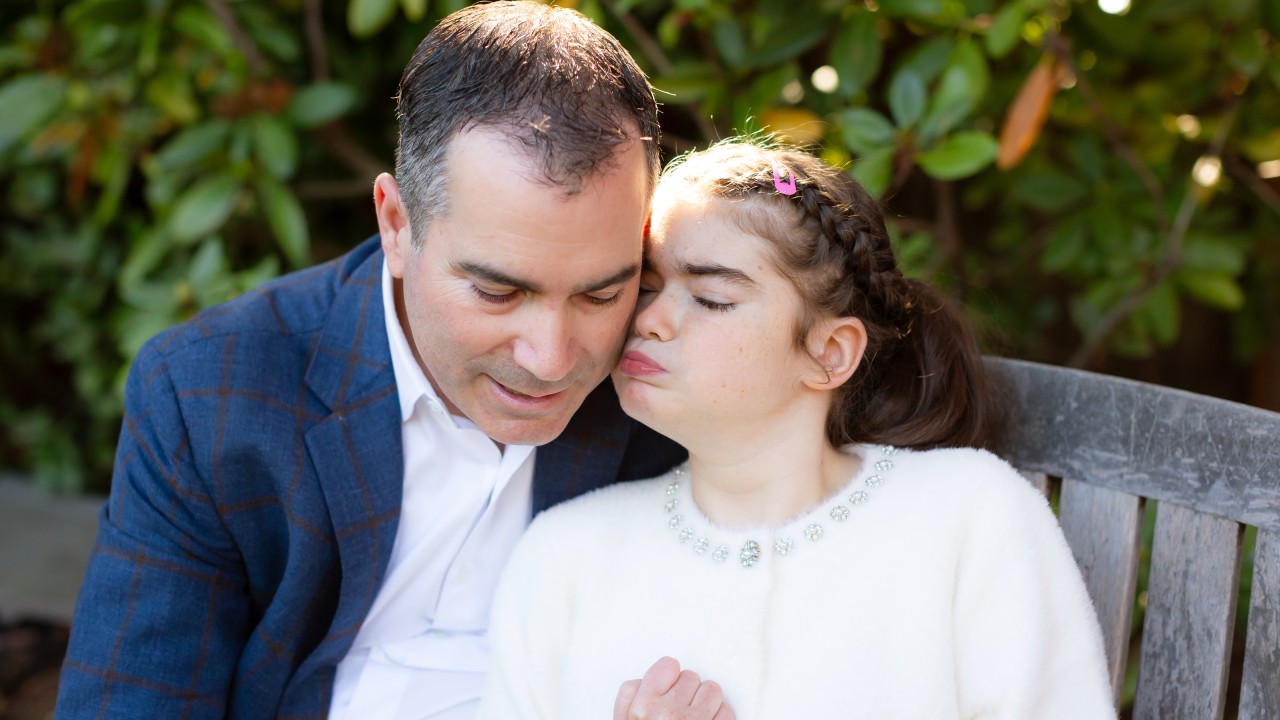
In 2013, my daughter Grace was diagnosed with NGLY1 Deficiency. At the time, nothing was known about the disease and very little was known about the gene. We were given a name for what Grace had, but we were not given a path for what to do next.
We entered a world where the urgency was intensely personal, but progress was slow and fragmented. There were brilliant scientists and clinicians who really wanted to help patients, yet there were few “default” mechanisms to connect people, fund early work, generate the right data, and move discoveries toward a real therapy. And when your child is the outlier, when the patient population is measured in single digits, many parts of the system don’t know what to do with you.
Rare Disease Day is a moment that spotlights resilience and community. It is also a reminder of how much families are forced to build from scratch. Parents become experts overnight. We learn several new languages, from genetics to trial design to regulatory processes. We do it because we have to. And we learn, quickly, that time is not neutral in pediatric disease. Every day matters, and the consequences of delay compound in ways that are hard to see until you have lived them.
Why we chose to build (not just hope)
My wife Kristen and I knew early on that waiting was not a strategy. We realized the world was not organized to deliver treatments for kids with an ultra-rare disease – not because people didn’t care – but because the coordination and incentives required to move from discovery to therapy were not built for diseases this small.
So we began assembling what was missing. That meant connecting researchers who were working in parallel, but not together. It meant supporting the creation of patient data and natural history knowledge to answer basic questions and serve as a foundation for research. It meant creating funding pathways when traditional funding didn’t exist. It also meant aligning people around a shared plan, because scattered effort, no matter how well-intentioned, won’t translate into treatments.
For us, the work started as a way to save Grace, but it quickly became a much larger mission.
Through the Grace Science Foundation, we helped coordinate a global research network and accelerate learning. After years of building the ecosystem, I co-founded Grace Science, LLC with Nobel Laureate Dr. Carolyn Bertozzi to translate discovery into treatments. We did it because the gap between scientific insight and real-world delivery is where families get stranded. And because when your child is waiting, you do not get to treat that gap as someone else’s job.
The lessons rare disease drug development taught us
These are the truths we learned by living this, first as parents, then as builders, and now as a team translating science into treatments. Some of these lessons are scientific. Many are operational. All of them affect whether kids get treated.
1) Research, clinical planning, manufacturing, and fundraising must move in parallel
Textbook drug development looks linear. Ultra-rare development doesn’t. Families don’t experience rare disease in phases, so development cannot be purely sequential.
In practice, you’re constantly running parallel workstreams. You’re advancing the science while enabling clinical execution. You’re building manufacturing readiness while building an evidence package. You’re raising capital while supporting sites, families, and long-term follow-up. If you wait for one piece to be “done” before starting the next, you will lose time you simply can’t afford to lose.
The bottom-line: In ultra-rare drug development, the bottleneck can shift overnight.
2) Consistent clarity is vital
Families and small teams need predictable requirements and early alignment on what “enough evidence” looks like. Without that, you can spend precious time and resources moving toward targets that shift late in the process. In a common disease, you might respond by enrolling more patients. In ultra-rare pediatric disease, you often can’t, because the patients may not exist in sufficient numbers, and because time is not neutral.
Practical definitions of clarity that I’ve found really matter in ultra-rare:
· Early alignment on endpoints and follow-up timelines
· Clear expectations on what is required versus what is optional
· Fewer late-stage surprises that cannot realistically be addressed in tiny populations
· Consistent communication and documentation of key decisions and rationale
3) Time is a biological variable, and there are zero days to lose
In pediatric rare disease, delays don’t just move a calendar. They change outcomes. Eligibility windows can close. Disease progression can narrow options. Families are forced into harder decisions with less runway.
I often think about it like a SpaceX launch. If you’re off by inches at launch, you can be off by miles in orbit. The same is true of dosing patients. Any slippage has lots of consequences downstream. It affects manufacturing timelines, site schedules, follow-up milestones, financing, and – most importantly – patient access.
4) Manufacturing is not a back-office detail. It can decide whether kids get treated.
Patients deserve safety, quality, and consistency – full stop.
But manufacturing can become the make-or-break issue in ultra-rare disease.
An additional manufacturing run is not just a technical step. For a small company, it can mean tens of millions of dollars, years of delay, and a shift in whether you have sufficient drug supply to treat children who are ready now. Requirements that are feasible for large companies or larger populations can be existential for ultra-rare programs.
If we want ultra-rare therapies to succeed, we need CMC expectations that are rigorous and risk-based, and also feasible for tiny populations and small-batch manufacturing.
Lastly, partnerships that unlock manufacturing capability can be as important as scientific breakthroughs.
5) With tiny populations, every patient matters, so trust, transparency, and follow-up matter more
Small patient numbers demand higher trust, not lower standards. When every patient represents a meaningful portion of the evidence base, you carry a deeper responsibility to design thoughtfully, communicate transparently, and follow patients long enough to understand outcomes.
Long-term follow-up in rare and ultra-rare is part of the ethical contract with families and part of the scientific integrity of the work. It also means we have to be careful about how we tell the story publicly. Families deserve honesty, and the broader community deserves rigor, but rare disease narratives are fragile. Poorly framed information can unintentionally discourage participation or distort interpretation.
6) Rare disease science is often bigger than rare disease, and silos slow everyone down
One of the most surprising lessons we learned is that rare disease research is frequently foundational. The label “rare” describes prevalence, not importance. When you’re forced to study biology at a deep level, you can uncover pathways that matter across multiple disease areas, including oncology and neurodegeneration.
This is why drug development can’t be confined to silos organized around single molecules, targets, or technologies. Those silos slow learning. In rare disease, that lost learning is lost time.
We need models that share tools and knowledge across programs. That includes assays, biomarkers, manufacturing approaches, clinical site readiness, and regulatory learnings.
What these lessons mean for leaders across the ecosystem
Rare Disease Week is about awareness, but awareness only matters if it becomes action. Families cannot solve systemic issues alone. Here is what leaders across the ecosystem can do to make a meaningful impact on rare disease communities.
For industry and investors
Ultra-rare development requires investing in the hard parts earlier. Waiting to fund only at traditional “value inflection points” can become a self-fulfilling failure, because you may not reach those points without early investment in manufacturing readiness, evidence generation, long-term follow-up, and clinical execution.
This also means backing approaches that compound learning across programs, not just one-off assets. When a company can reuse tools and knowledge across multiple programs, the entire risk profile changes. The work becomes more scalable, even when the patient populations are not.
It also means recognizing the reality of survival. For ultra-rare companies, a single manufacturing requirement or a single delay can threaten the viability of the entire program. If we want innovation, we need funding models that can absorb that reality instead of punishing it.
For regulators
Families deserve rigorous oversight and safety. Regulators deserve respect. And ultra-rare pediatrics deserves fit-for-purpose pathways that are stable, transparent, and feasible.
Reducing late-stage surprises is one of the most important things the system can do. Early alignment on what “enough evidence” looks like, clear documentation of key expectations, and consistent communication can prevent catastrophic last-minute changes that ultra-rare programs cannot simply “power through” by enrolling more patients.
Regulatory flexibility is not leniency. It is precision: applying rigorous standards in a way that reflects the realities of tiny populations, pediatric timelines, and manufacturing constraints. If we want ultra-rare innovation to succeed in the United States, the path has to be safe, but it has to be workable.
For manufacturing partners
We need manufacturing ecosystems that can serve small-batch therapies without treating them as exceptions that don’t fit standard operating models. That means partners who understand that “commercial scale” can still be small in ultra-rare. It means building realistic timelines and validation approaches. It means being willing to work with mission-driven teams that may not have the infrastructure of a global pharmaceutical company, but are still committed to the highest standards.
In ultra-rare disease, manufacturing partners aren’t simply vendors. They are part of whether children get treated.
For policymakers and government
Rare disease should be treated as an innovation engine, not a niche. Policy can either unlock rare disease progress or quietly suffocate it.
Continued support for incentives and infrastructure, such as Priority Review Vouchers (PRVs) and other mechanisms that recognize the economics of tiny patient populations, matters. PRVs are one example of a mechanism that can materially change the economics of ultra-rare development by creating meaningful value that can be reinvested into manufacturing, evidence generation, and sustained progress. PRVs are not a cure-all, but in a field where the fixed costs are high and the populations are small, they can be the difference between continuity and collapse.
If America wants to lead in advanced therapies, ultra-rare disease is part of that strategy. It’s where new modalities are often proven first, where manufacturing models are tested under real constraints, and where coordination between science and systems is most essential.
Rare Disease Week: a call to action
Rare Disease Week is a moment to honor families who live this every day. It is also a moment to be honest about what still is not working, and to advocate for better solutions.
Families bring urgency, persistence, and skin in the game. The ecosystem has to bring a workable path from discovery to development, from manufacturing to access. That path requires leaders across industry, investment, regulation, manufacturing, and government to modernize how we develop and deliver therapies for ultra-rare diseases.
We started this because of Grace. We are building it so the next family does not have to start from scratch.